
How to Design a Low-Maintenance Landscape for Alaska Homes
Mowing, trimming, replanting, repairing. If your yard feels like another seasonal chore list, you are not alone. Many Alaska homeowners want an outdoor space that looks good without demanding constant attention, especially when weather and growing conditions already work against them.
The good news is that low-maintenance landscaping is possible with the right planning. From new construction homes in Palmer and Wasilla to established neighborhoods in Anchorage, homeowners across Southcentral Alaska can design landscapes that hold up to soil conditions, weather, and changing seasons while still looking intentional and complete year after year.
What Low-Maintenance Landscaping Really Means in Alaska
Low-maintenance landscaping in Alaska is about building a landscape that performs reliably over time. Instead of focusing on quick results, the goal is long-term durability, healthy plant growth, and materials that hold their shape through changing seasons.
A low-maintenance landscape:
Uses plants suited to Alaska’s climate
Limits areas that require frequent trimming or repair
Handles snow, drainage, and freeze cycles without shifting or damage
Maintains structure and appearance through seasonal changes
When these elements work together, the landscape stays functional and attractive with less ongoing effort.
Planning for Alaska’s Winters and Site Conditions
Every successful low-maintenance landscape starts with a clear understanding of the site. Alaska’s climate, soil conditions, and seasonal extremes influence how well a landscape performs over time.
Understanding Soil, Drainage, and Freeze Cycles
Soil composition and drainage vary widely across Southcentral Alaska. Poor drainage often leads to frost movement, plant stress, and shifting hardscape features.
Proper grading and soil preparation help:
Prevent water from pooling near foundations and planting areas
Reduce frost heave that can damage plants and structures
Support strong, healthy root systems
Addressing these conditions early helps prevent problems that increase maintenance needs later.
Designing for Snow Storage and Seasonal Access
Snow management plays an important role in landscape design. Without planned snow storage areas, heavy snowfall can damage plants, compact soil, and block walkways.
Clear pathways, durable surfaces, and thoughtful spacing protect the landscape during winter and reduce wear on planting areas and hardscape features.
Choosing Plants That Thrive With Less Upkeep
Plant selection has a direct impact on how much attention a landscape requires over time. Plants that are native or well adapted to Alaska’s climate tend to establish more easily, handle weather extremes better, and require less intervention.
Native Plants That Match Alaska Hardiness Zones
Native and Alaska-adapted plants are accustomed to local soils, moisture levels, and seasonal changes. These plants typically require less watering, fertilizing, and replacement than non-adapted varieties, which supports long-term landscape stability.
Hardiness zones also play an important role in plant survival and long-term performance. Much of Southcentral Alaska falls within USDA hardiness zones 3 to 5, though microclimates can vary significantly from one property to another.
Selecting plants suited to the correct zone helps ensure reliable winter survival, consistent growth patterns, and fewer losses after harsh winters. Professional landscape planning accounts for sun exposure, wind, soil conditions, and elevation, not zone numbers alone.
The Role of Lawn Areas in Low-Maintenance Design
Grass can be a practical part of an Alaska landscape when it is used intentionally. Smaller, well-defined lawn areas provide space for play and visual balance while keeping maintenance under control.
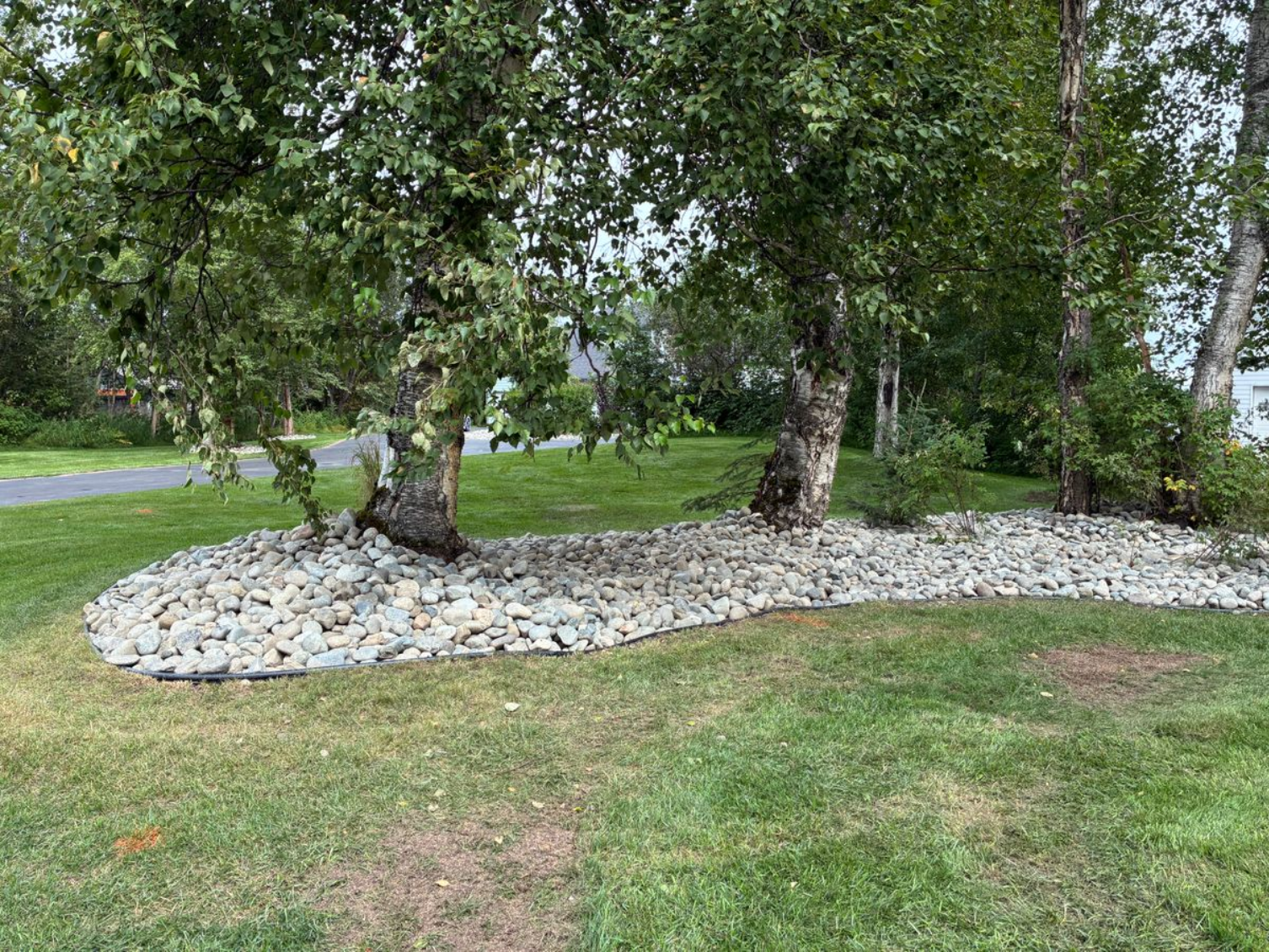
In low-maintenance designs, lawn areas are typically limited to spaces where they serve a clear purpose rather than covering the entire yard. Grasses including bluegrasses and fescues perform well in Alaska conditions when paired with proper grading, drainage, and edging.
This approach reduces mowing and repair while allowing other areas of the landscape to rely on more durable plantings or hardscape features.
Groundcovers That Reduce Maintenance and Erosion
Groundcovers play an important role in low-maintenance landscapes by limiting erosion, suppressing weeds, and protecting soil through seasonal changes. When planned correctly, they fill in naturally over time, reducing exposed soil and minimizing the need for ongoing intervention, especially in areas where lawn or larger plantings are not practical.
Common groundcover options used in Southcentral Alaska landscapes include dwarf dogwood, false lily-of-the-valley, kinnikinnick, lowbush cranberry, nagoonberry, and pearly everlasting.
Smart Plant Grouping and Spacing
Grouping plants with similar water and light needs improves overall health and reduces the need for frequent adjustments. Proper spacing allows plants to mature naturally, which limits overcrowding and minimizes corrective pruning over time.
Using Hardscape to Reduce Long-Term Maintenance
When designed correctly, hardscape materials also improve drainage and limit wear caused by Alaska’s seasonal conditions.
Walkways, Patios, Retaining Walls, and Gravel Surfaces
Stone and paver surfaces eliminate mowing and hold up well in high-traffic areas. Retaining walls help manage elevation changes and reduce erosion while creating clean, defined spaces within the landscape

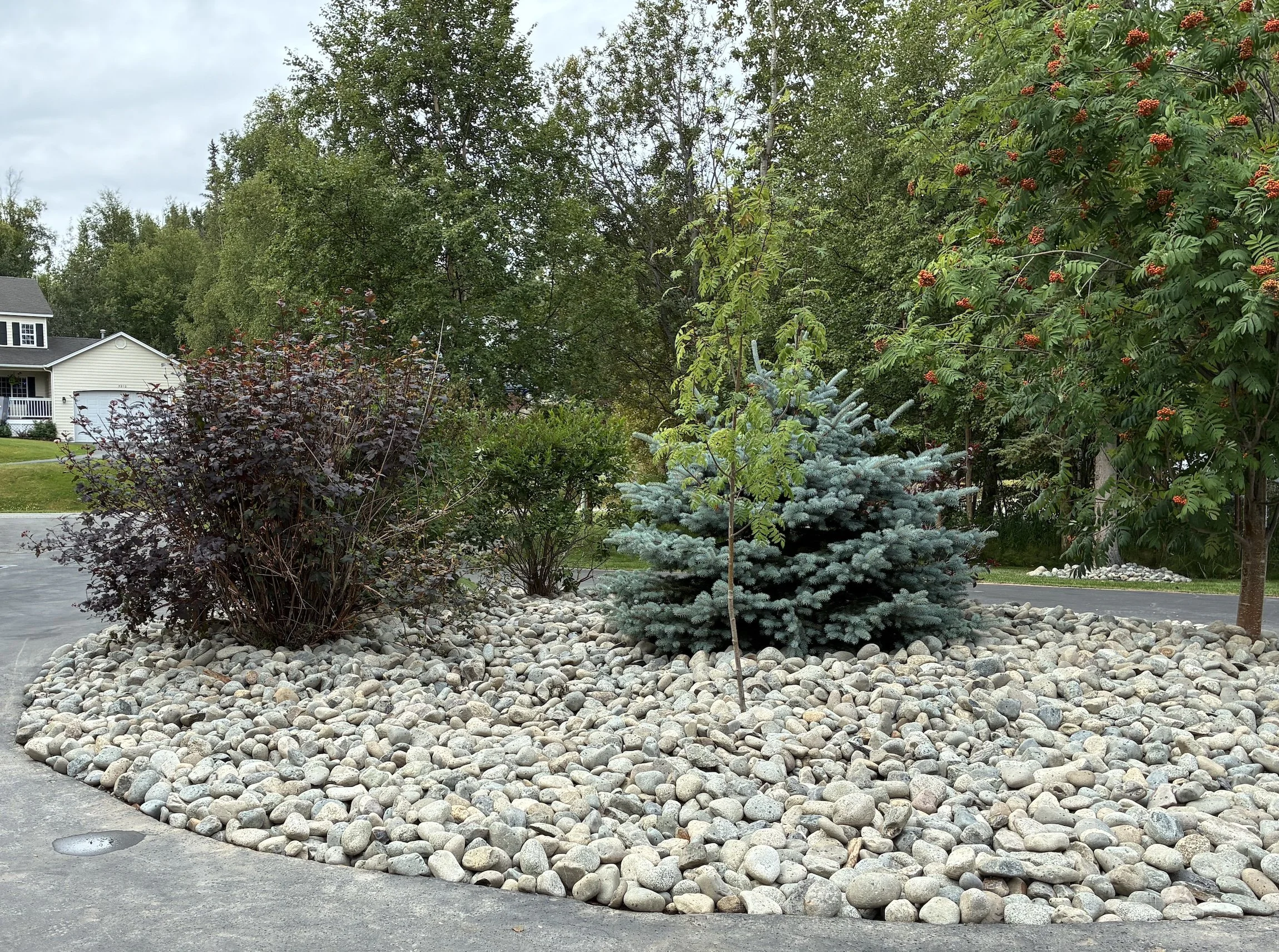
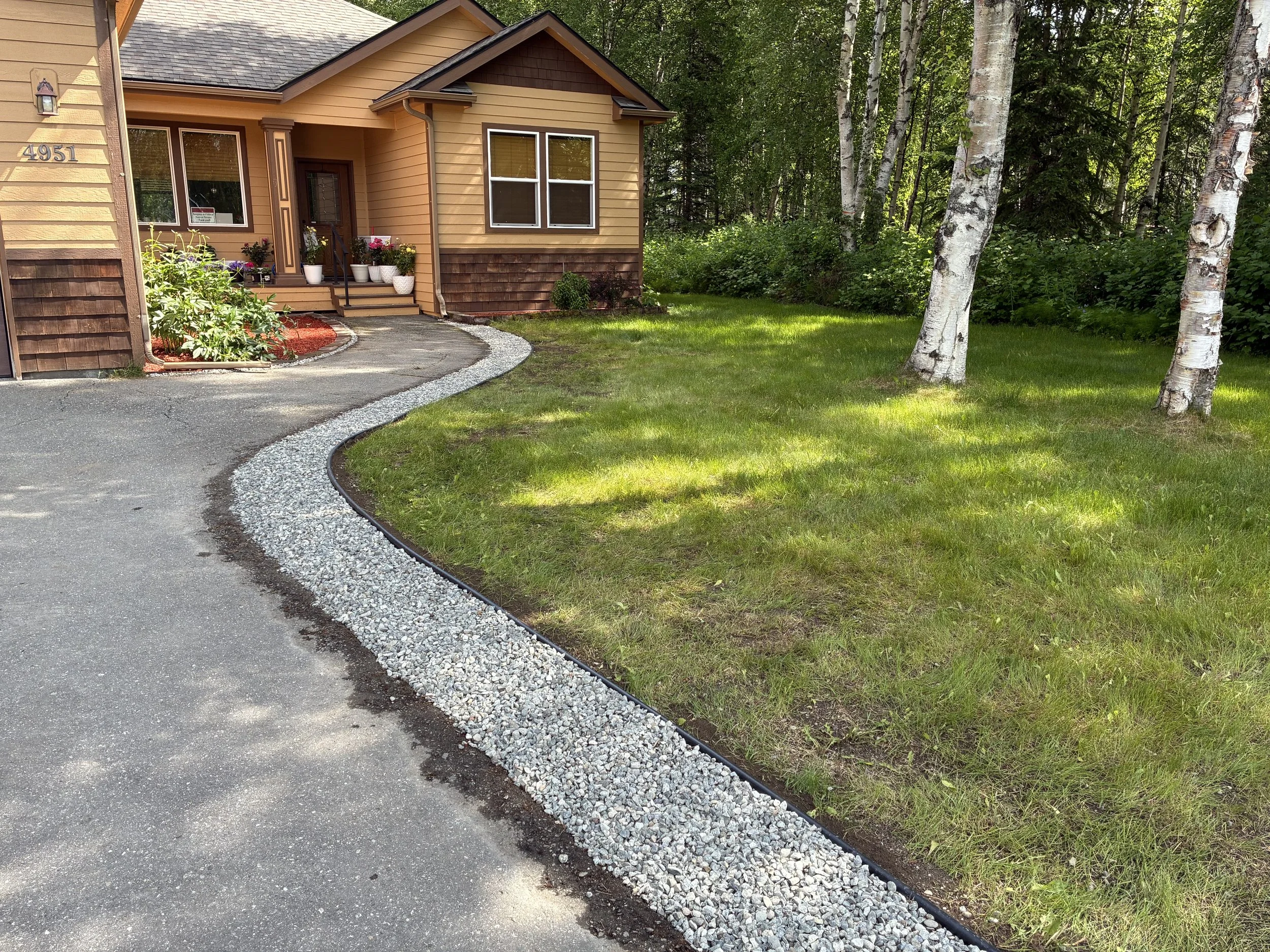
Gravel and decorative stone offer a low-maintenance alternative in areas where turf or plantings struggle. Gravel works well along foundations, between planting beds, in side yards, and as transition zones between hardscape and vegetation. When installed properly, gravel improves drainage, limits erosion, and reduces ongoing upkeep.
Why Proper Base Preparation Matters in Alaska
In Alaska, long-term performance depends on what lies beneath the surface. Proper base preparation allows hardscape features, including gravel surfaces, to withstand freeze and thaw cycles without shifting, cracking, or settling over time.
Creating a Landscape That Works for Your Alaska Home
A low-maintenance landscape should feel natural, balanced, and suited to its surroundings. With thoughtful planning and durable design choices, homeowners can enjoy outdoor spaces that look great without constant upkeep.
You don’t need to be an expert in plant selection, hardiness zones, or soil conditions. Walker Landscapes understands Alaska’s climate and how it shapes long-term landscape performance. Our team helps homeowners plan with confidence and design landscapes built for local conditions from the start.
Work with Walker Landscapes to bring your landscape vision to life. Together, we can design a private outdoor retreat that feels natural, enduring, and distinctly Alaskan. Call (907) 357-2555 to schedule your free consultation.
About Walker Landscapes
Walker Landscapes serves the Mat-Su Valley, Anchorage, and nearby communities with expert landscaping for residential and commercial properties. From low-maintenance plant selection and sod installation to patios and garden beds, we design durable, functional landscapes built for Alaska’s climate. Our team brings local experience and a commitment to quality, helping properties across the region perform well and look their best season after season.

Seth Walker, Co-Owner

Jeff Walker, Co-Owner
