
The Best Time to Plant in Alaska for Long-Term Landscape Success
The sun is rising earlier and sticking around well past 8 PM. Snow is pulling back from driveways and yards across Palmer and Wasilla. Lowe’s and local garden centers are rolling out planter pots, hanging flower baskets and pallets of soil.
It feels like spring has sprung, and it’s time to start planting in the garden!
That instinct makes sense, but in Alaska, starting too early is one of the quickest ways to waste time and money on your yard.
Successful planting depends on when the soil is ready, not the date on the calendar. When conditions are right, everything moves forward. When they’re not, progress stalls before it ever really begins.
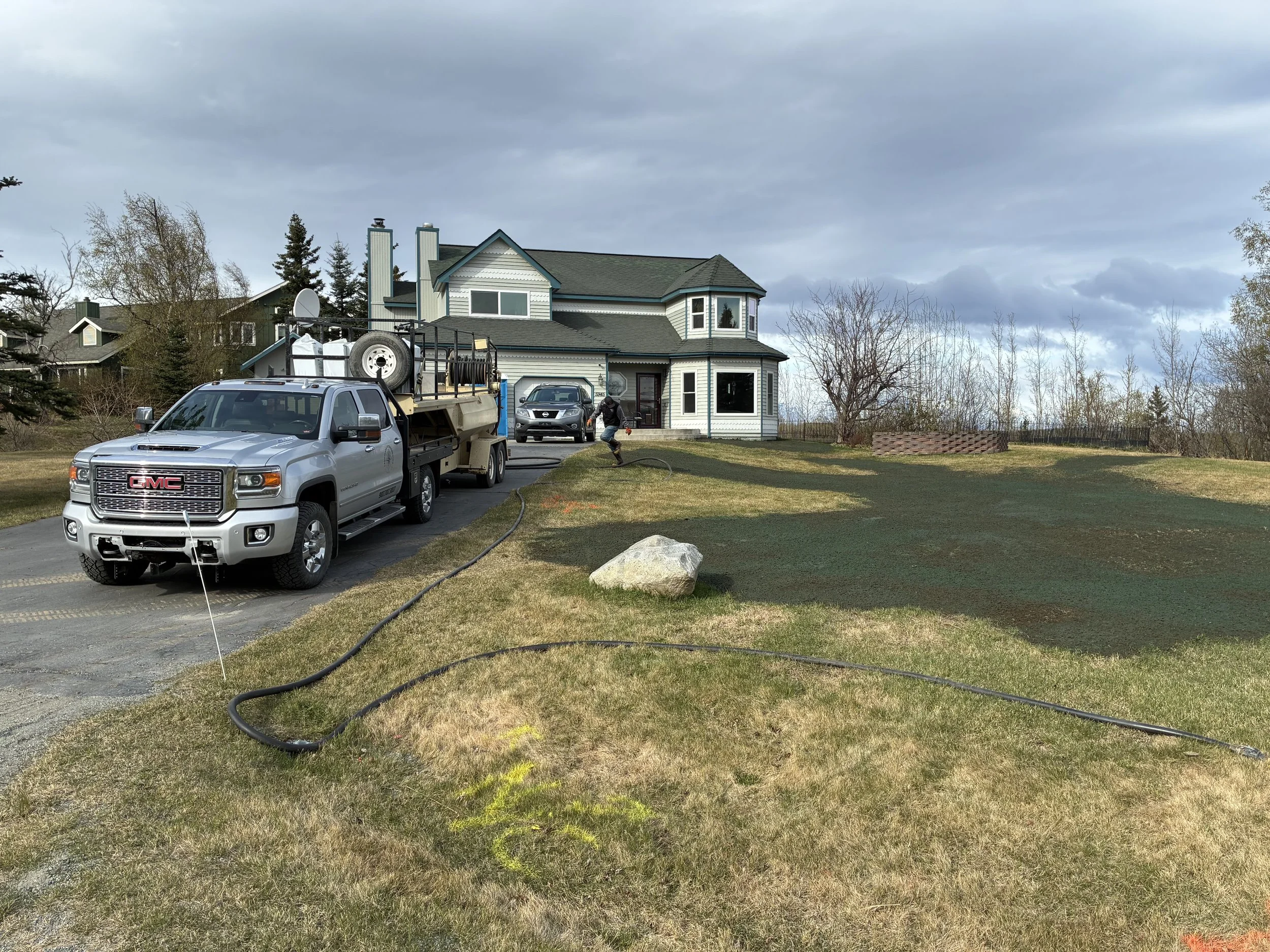
Why Early Planting Creates Problems
Once the surface clears, it is easy to assume the yard is ready. In most cases, it is not.
The soil below often remains cold and saturated, which limits early development and leads to uneven results. Plants may appear to start growing, but they lack the conditions needed to establish properly.
By mid-summer, this often shows up as inconsistent growth across the yard, with some areas performing well and others lagging behind.
Estimates and advice found online often don’t reflect Alaska’s environmental demands. Climate, soil, and seasonal timing all influence how projects need to be designed and installed here.
When the Ground Is Actually Ready to Plant in Alaska
Across the Mat-Su Valley and surrounding areas, the planting window is short but reliable.
Most successful planting takes place from late May through early July. By then, soil conditions support steady growth, and new plantings can begin adjusting immediately instead of waiting for the ground to improve.
How to Read Your Property Instead of the Calendar
The USDA Plant Hardiness Zone Map places much of Southcentral Alaska in Zones 3 through 5. It’s a useful reference for winter survival, but it doesn’t indicate when your yard is ready for planting. You can explore your specific zone in the USDA Plant Hardiness Zone Map.
Conditions vary from one property to the next. Sun exposure, drainage, and soil type all influence how quickly the ground becomes workable. A south-facing yard may warm sooner, while shaded or low areas can remain cold and slow to dry out.
The information that comes with purchased plants reflects cold tolerance once established. It does not account for timing at installation.
What Happens to Plants During Alaska Winters
By the time fall ends, your landscape has already shifted into survival mode.
What Plants Go Through Beneath the Surface
Dormancy begins
Growth slows and energy is stored below ground to carry the plant through winter.
Snow provides insulation
A consistent snow layer helps protect underground systems from extreme temperature swings.
Soil movement becomes the main pressure
Freeze thaw cycles shift the ground repeatedly, disturbing anything that has not fully settled.
Moisture becomes unpredictable
Here in the Valley, wind is nothing new to us. Wind and changing soil conditions can limit moisture availability, even in cold weather.
Plants that enter winter well established tend to return evenly in spring. Others often show delayed growth or uneven performance.
Spring Versus Late Season Planting in Alaska
Timing affects how different parts of your landscape perform, especially lawns.
Why Late Spring Works Best for Lawns and New Plantings
Late spring provides the most consistent conditions for grass installation and general planting.
Grass seed and hydroseed respond best when soil is reliably warm, allowing for even germination and fuller coverage. Lawns installed during this period tend to fill in more uniformly and require fewer corrections later.
Other plantings also adjust more smoothly and maintain steadier growth through summer.
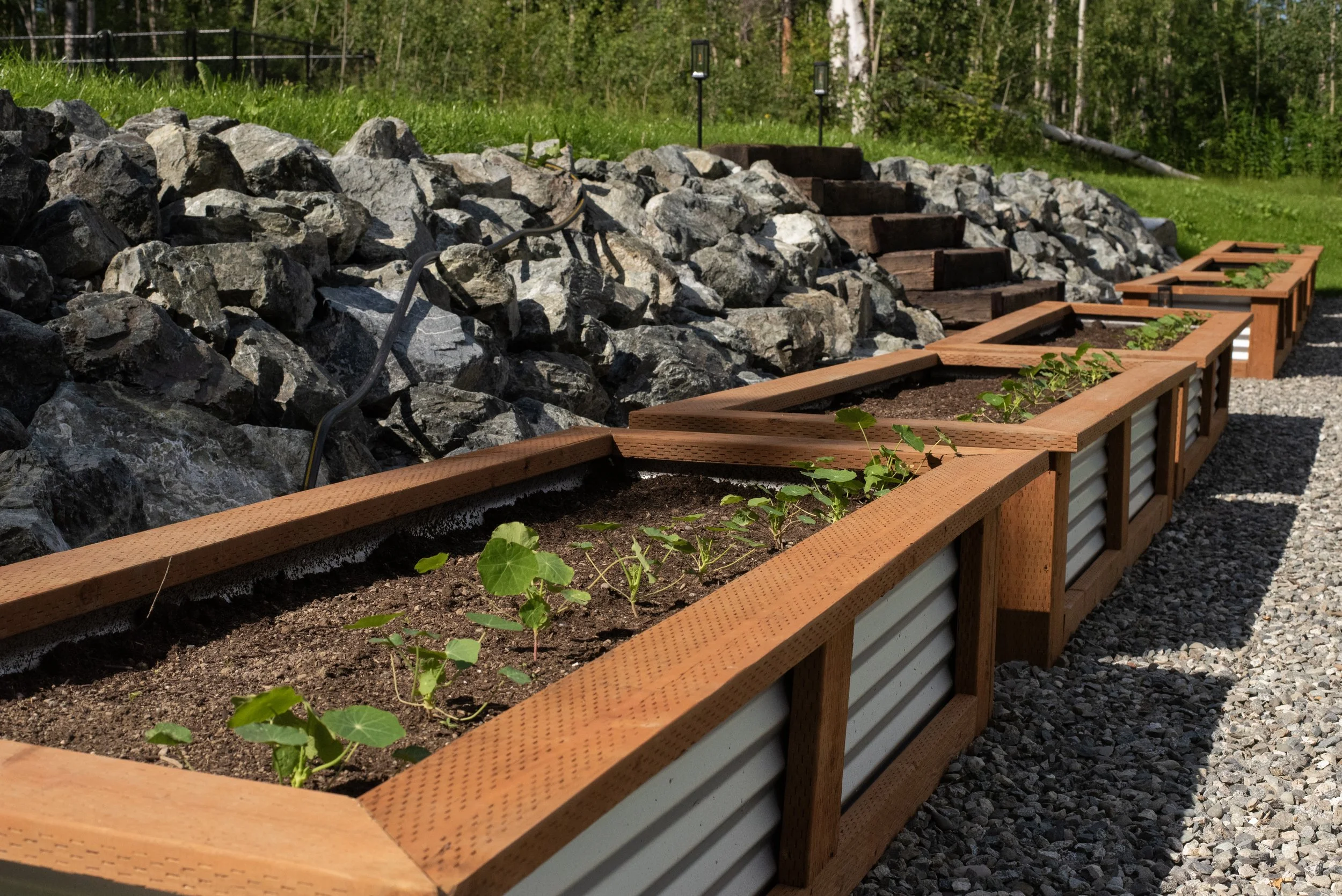
What to Expect From Late Season Projects
Late-season planting can still be completed, but results tend to vary more.
Lawns often establish but may remain thinner heading into fall, which can require additional work the following year. Trees and shrubs generally survive, though some take longer to catch up in appearance.
Watering becomes more important, and consistency plays a larger role in overall results.
Why Your Property Changes the Timeline
Even within the same neighborhood, planting readiness can differ.
Soil composition, drainage, sunlight, and wind exposure all influence how quickly your yard becomes workable. New construction sites often need additional preparation, as compacted soil and uneven grading can limit performance regardless of timing.
Understanding these factors helps create a more consistent result across the entire property.
Start Your Landscape at the Right Time
Alaska’s planting season moves quickly, and planning early makes a noticeable difference in how your landscape comes together.
Walker Landscapes is a family-owned company rooted in the Mat-Su Valley, with years of experience working in Alaska’s unique conditions. Our team focuses on proper preparation, smart plant selection, and timing that supports long-term performance.
Using advanced design software and site-specific imagery, we create clear, realistic visuals so you can see exactly how your yard will look before work begins.
If you’re planning a new yard or updating your landscape this season, consider scheduling early with the Walker Landscapes Team to secure your preferred spot during the planting window. Call us at (907) 357-2555 to book your consultation or reach out through our contact form to get started.
About Walker Landscapes
Walker Landscapes proudly serves the Mat-Su Valley, Anchorage, and surrounding communities with professional landscape design and installation for residential and commercial properties. With a clear understanding of Alaska’s short planting season and how local conditions affect timing, the team helps homeowners make confident decisions from the start.
From patios and retaining walls to complete yard transformations, Walker Landscapes designs and installs outdoor spaces that establish properly, perform reliably, and continue to improve year after year.

Seth Walker, Co-Owner

Jeff Walker, Co-Owner
