
Pollinator Landscaping for Alaska Yards
Alaska gives pollinators very little room for error, and that constraint shapes how every successful yard is built. The growing season is short, spring arrives unevenly, and early blooms can disappear before insects are fully active. If food is not available at the right time, pollinators leave or never establish.
That reality changes how a yard needs to be built. A landscape that looks full in July can still fall short if it offers nothing in May or late August. Consistent bloom across the season supports pollinators and creates a landscape that performs reliably from start to finish.
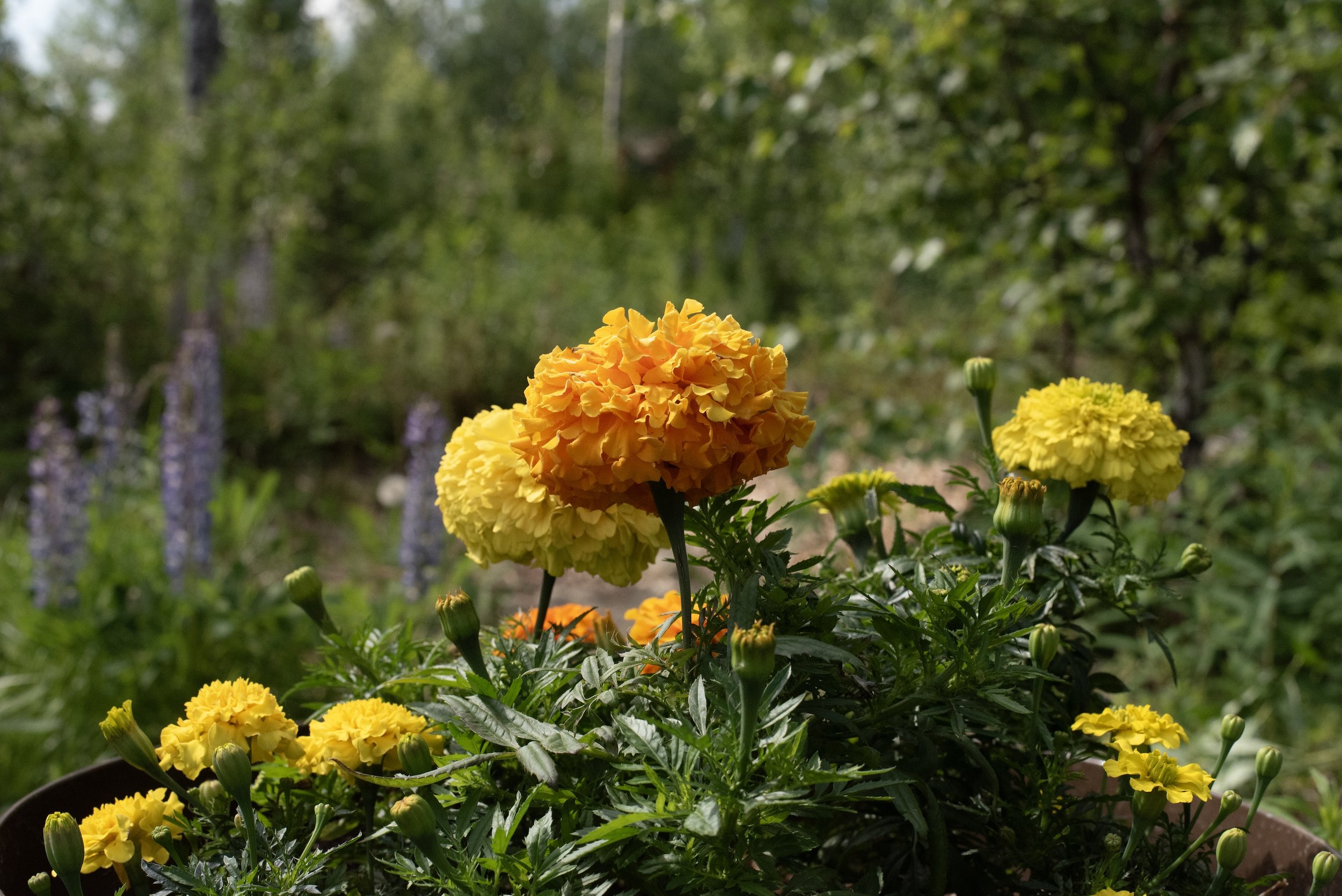
Structure matters as much as plant choice. Many native bumble bees nest in exposed soil, hollow stems, or undisturbed areas. When every surface is mulched, cut back, or over-maintained, those nesting opportunities disappear and activity declines.
Well-designed pollinator landscapes in Alaska are intentional. A steady sequence of blooms paired with usable habitat supports insects from early emergence through fall, leading to stronger plant growth and a more complete outdoor space.
What Makes Alaska Different for Pollinators
Alaska compresses pollination into a short, uneven season where bloom windows close quickly and gaps leave insects without food at critical points. Yards built around a single wave of summer color often miss early emergence and late-season activity, which limits both pollination and overall landscape performance.
Cool temperatures further reduce movement and feeding time, while native plant relationships carry more of the load. Local pollinators depend on specific bloom timing and flower structure, and when those plants are missing, pollination drops and plant performance follows.
In Alaska, plant selection and habitat planning need to be built around local conditions from the start to create a landscape that performs reliably.
Bumble Bees Drive Pollination in Alaska
Bumble bees are the primary pollinators across Alaska. They tolerate colder temperatures, stay active in marginal weather, and operate when other insects cannot.
They use buzz pollination, vibrating flowers like blueberries, Oregon grape, and cranberries to release pollen. This process directly affects fruit production and the overall productivity of the landscape.
Design should reflect that reality. A yard that consistently supports bumble bees will carry most of the pollination that drives plant health, yield, and long-term performance.
Are Honeybees Native to Alaska?
Honeybees are introduced and managed, not native to Alaska, and their survival depends on human support rather than natural adaptation.
They can contribute to pollination, but they are less reliable in cold conditions and should not guide planting decisions.
Landscapes built around native pollinators tend to perform more consistently because they align with the insects already adapted to Alaska’s conditions.
Seasonal Planting That Keeps Food Available
Pollinator planting in Alaska depends on sequence, not variety. Bloom windows are short and uneven, so gaps leave insects without food at critical points. The goal is continuous coverage across a compressed season while maintaining a clean, cohesive planting design.
Early Season Starts the Cycle
Early-season plants support pollinators emerging from dormancy, and without them, many species never establish in the yard.
Willow, Northern Red Currant, Pasqueflower, and Jacob’s Ladder provide some of the first reliable nectar and pollen. Their value comes from timing, and when placed correctly, they establish a strong foundation for the rest of the season.
Placement priorities
Place early bloomers where they activate first.
South-facing exposure warms faster and triggers earlier flowering
Areas that thaw first support earlier insect activity
Sheltered zones reduce wind and temperature stress
In colder or shaded areas, these plants often bloom too late to support early pollinators, which weakens the entire system.
Mid-Summer Carries the System
Mid-season does most of the work in Alaska. Strong performance here keeps the landscape active when early blooms are inconsistent.
Wild Rose, Alpine Sweetvetch, Woolly Geranium, and Western Columbine perform best when planted in dense groupings that improve efficiency and increase visitation.
More variety does not improve results. Repetition and overlap create planting areas that feel intentional while keeping pollinators active through changing conditions.
Late Season Extends Survival
Late-season plants support pollinators preparing for dormancy and influence how many return the following year.
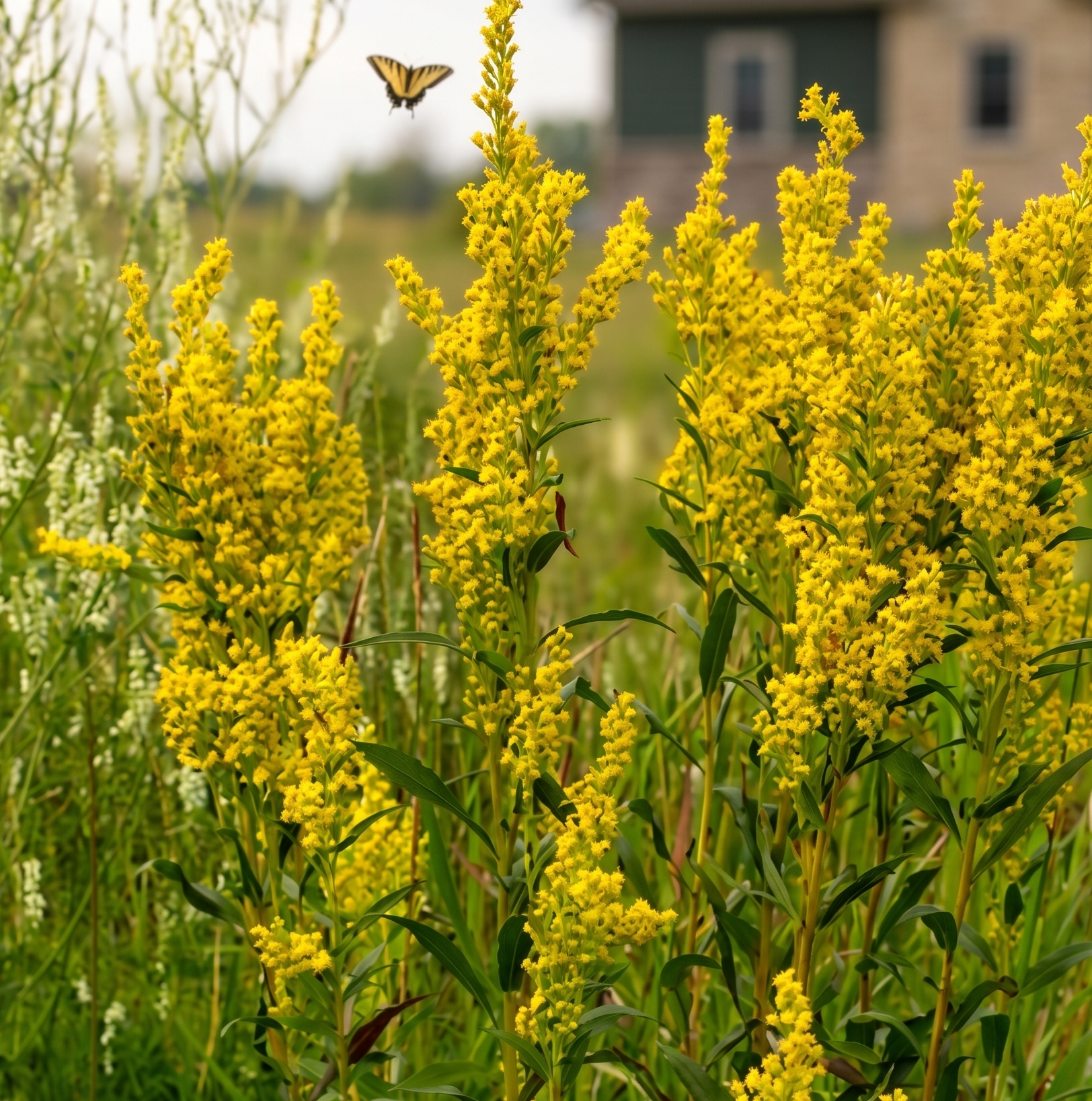
Fireweed, Goldenrod, Yarrow, and Siberian Aster provide critical nectar when conditions allow and help extend activity beyond peak summer.
Without this phase, pollinators drop off early and population strength declines over time, which affects both plant performance and long-term landscape consistency.
Alaska landscapes perform best when every part of the season is used efficiently.
Keep Plant Selection Responsible
Choose species that are well-adapted to Alaska and avoid introducing aggressive or fast-spreading plants that can outcompete native vegetation. A controlled plant palette supports pollinators while protecting the long-term balance of the landscape.
Layout Decisions That Change Results
Plant selection matters, but layout determines how well a landscape actually performs. The same plants can feel scattered or cohesive depending on how they are arranged, and that difference shows up immediately in both appearance and performance.
In Alaska’s short season, layout also affects efficiency. Well-placed groupings make it easier for pollinators to move through the yard.
🐝 Build in Clusters, Not Singles
Pollinators are drawn to concentrated resources, which makes grouping one of the most effective layout decisions.
Planting in clusters of at least three, and preferably five or more, increases visibility and allows insects to move between blooms without unnecessary effort. This improves pollination while strengthening how the planting area reads visually.
Grouped plantings create structure that carries across the entire landscape.
🐝 Prioritize Simple, Accessible Blooms
Flower structure plays a direct role in how often plants are used. In cooler conditions, pollinators favor blooms that are easy to access and efficient to feed from.
Simple, open flowers perform more consistently than heavily layered varieties, which can restrict access to nectar and reduce activity.
This approach creates a cleaner, more controlled planting style that holds together across the entire landscape.
🐝 Design in Patches, Not Lines
Linear planting spreads resources too thin and limits how effectively pollinators can work within a space.
Grouped planting areas create concentrated zones where insects can feed continuously, improving coverage and supporting more consistent plant performance.
These patches define space and give the landscape a clear, intentional structure.
🐝 Keep Edges Clean and Defined
Clear edges and defined planting zones hold the layout together. Without them, planting areas lose shape over time and the yard begins to feel inconsistent.
Well-defined boundaries create contrast, sharpen the overall design, and maintain a polished appearance throughout the season.
Strong structure allows the landscape to support pollinators while still delivering a finished, professional result.
Habitat Elements Most Yards Get Wrong
Pollinators rely on more than flowers. Nesting and shelter are often removed through routine maintenance, which limits long-term activity.
Allow for Ground Nesting
Many native bees nest in soil, and continuous mulch blocks access. Small, controlled areas of exposed soil support these species without changing how the yard looks or functions.
Focus on:
Bed edges
Dry, low-traffic zones
South-facing soil
These areas support solitary bees, which are usually not aggressive and rarely sting.
Leave Select Natural Material
Removing all debris reduces shelter. Keeping small amounts of wood or stems in less visible areas provides protection while maintaining a clean, managed appearance.
This approach supports beneficial insects without encouraging nuisance activity near primary living spaces.
Avoid Full Fall Cutbacks
Many pollinators use hollow stems for nesting and overwintering. Leaving some stems in place through winter improves return activity in spring.
Trim selectively instead of clearing everything, especially in areas away from patios and entry points.
Designing a Pollinator Landscape That Works in Alaska
Pollinator landscapes in Alaska succeed when plant selection, layout, and seasonal timing are planned as a single system. When these elements align, the result is a yard that performs consistently, supports long-term plant health, and maintains a clean, intentional appearance throughout the season.
Well-designed landscapes do more than function. They hold their structure, improve curb appeal, and add lasting value to the property over time.
Walker Landscapes designs and installs outdoor spaces that balance structure, function, and lasting quality, creating landscapes that work with Alaska’s conditions instead of against them.
If you want a landscape that supports pollinators and maintains a polished, cohesive look, our team can design and build it.
About Walker Landscapes
Walker Landscapes proudly serves the Mat-Su Valley, Anchorage, and surrounding communities with professional landscape design and installation for residential and commercial properties. With a clear understanding of Alaska’s short planting season and how local conditions affect timing, the team helps homeowners make confident decisions from the start.
From patios and retaining walls to complete yard transformations, Walker Landscapes designs and installs outdoor spaces that establish properly, perform reliably, and continue to improve year after year.

Seth Walker, Co-Owner

Jeff Walker, Co-Owner
