
How Much Snow Should Fall Before You Plow in Alaska?
Around 2 inches of accumulation is a practical point to start plowing, which is the threshold Walker Landscapes uses for both Subscription and Per Push snow plowing service. Clearing at that point can help prevent fresh snow from becoming packed down by vehicles or building into deeper accumulation.
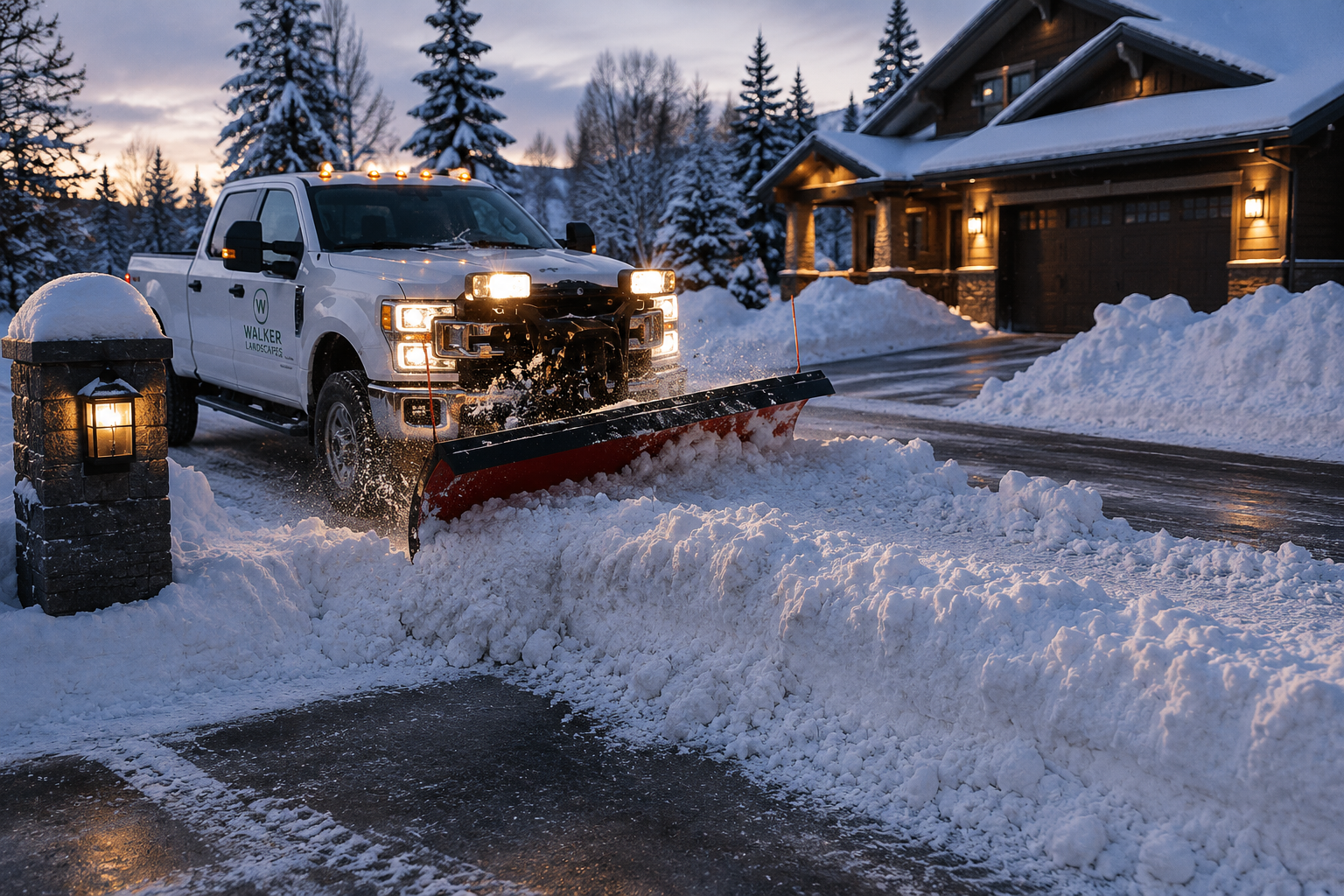
Conditions still matter. Two inches on a lightly used residential driveway can behave very differently from the same amount in a busy commercial parking lot or apartment entrance. The Mat-Su Valley also gets its share of wind, which can leave exposed pavement nearly clear while building deeper drifts somewhere else on the same property.
For homeowners and businesses, snowfall totals are useful, but they do not tell the whole story. Traffic, drifting, property use, and the need to keep entrances or parking areas open can all affect when plowing makes sense.
Why Waiting Too Long Can Make Snow Harder to Clear
Fresh snow generally moves more easily than snow that has been driven over repeatedly. Tires press it against the surface, creating a denser layer that can remain even after loose snow is removed.
Wind can complicate things further. Open driveways, private roads, and commercial parking areas may develop deeper drifts in some spots while other sections remain relatively clear. On a business property, even a modest drift can narrow parking or interfere with deliveries and entrances.
NOW OFFERING SNOW PLOWING
Walker Landscapes provides residential and commercial snow plowing in Palmer, Wasilla, and throughout the Mat-Su Valley. Both Subscription and Per Push service automatically begin when snowfall reaches 2 inches.
Should you wait until the snow stops before plowing?
Not necessarily. If a driveway, parking lot, or access road needs to stay usable during a longer storm, clearing snow before the final flakes fall may make more sense than waiting for the entire event to end.
During long or heavy storms, additional passes may be needed. Per Push customers are billed for each visit, while repeat plowing visits are included in the Subscription rate.
Why Does Walker Landscapes Use a 2-Inch Snowfall Trigger?
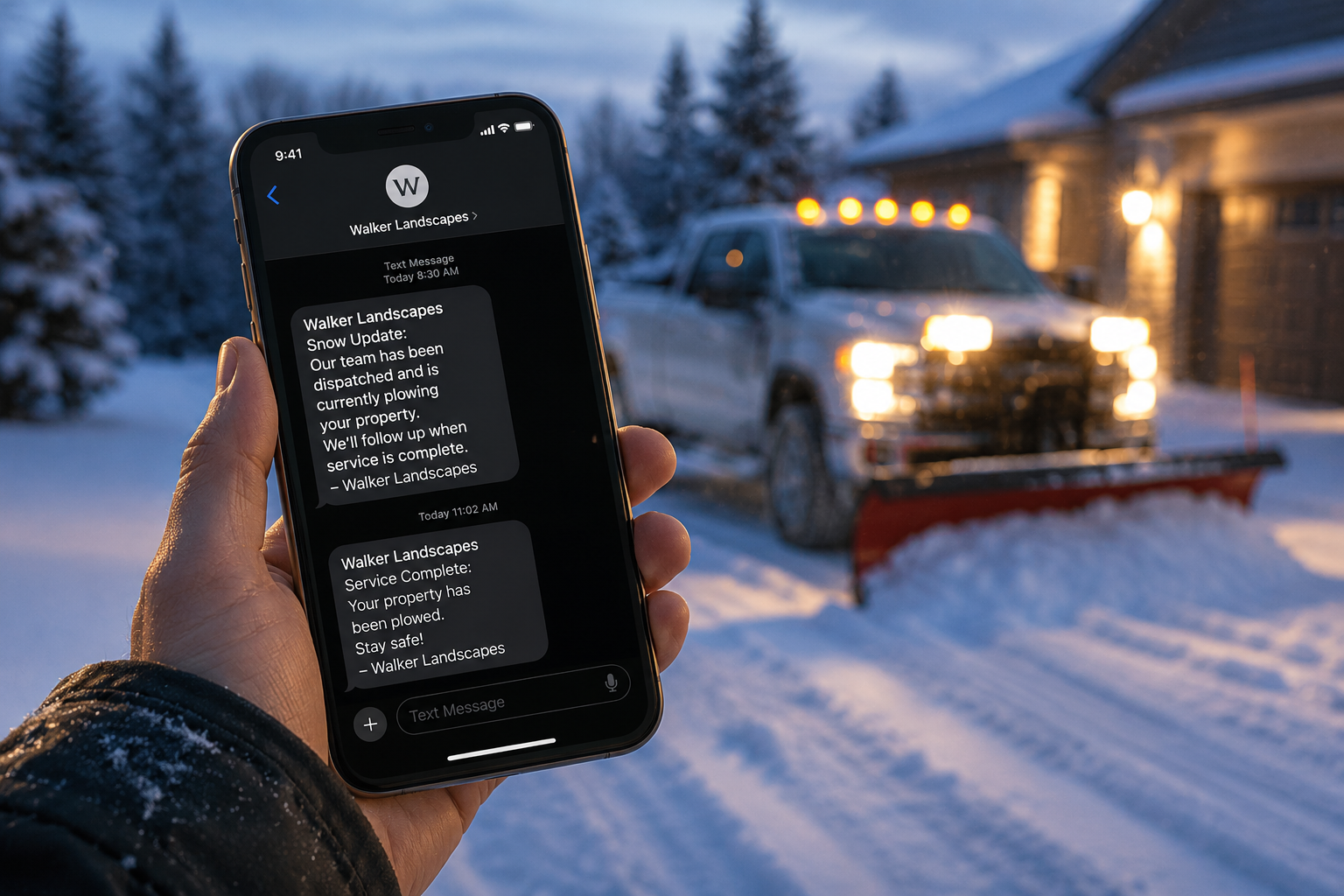
Once snowfall reaches 2 inches, Walker automatically dispatches crews for customers on either service option. The difference is not when the plow arrives, but how the service is billed.
Subscription: Customers pay a flat rate rather than being charged for each qualifying plowing visit.
Per Push: Service is still automatic at the 2-inch trigger, but the customer is billed for each visit.
That distinction becomes especially important during a storm that requires more than one pass. Per Push charges apply to each visit, while Subscription customers are not charged extra for additional plowing visits.
The Subscription plan covers plowing only. Shoveling, sanding, and ice melt are not included.
Does the Surface You’re Plowing Make a Difference?
Yes. The surface underneath the snow can affect how carefully it should be cleared, especially early in the season.
Gravel Driveways and Lots
Loose gravel and unfrozen ground can be easier to disturb, so early-season plowing requires extra care until the base is firmly frozen.
Asphalt and Concrete
Paved driveways and commercial lots provide a firmer surface, but frequent vehicle traffic can still compress snow into packed tracks, especially near entrances, loading areas, and commonly used parking spaces.
Pavers and Landscape Edges
Paver borders, edging, planting areas, and other low landscape features can disappear beneath snow. Knowing where those features are helps reduce the chance of catching or burying them during plowing.
Where You Put the Snow Matters
Snow piles need somewhere to go all winter, and that location can affect how the property functions later.
Leave room for the next storm. Avoid filling every available edge early in the season. Residential drives and commercial lots both need enough snow-storage capacity for future accumulation.
Protect movement and visibility. Keep piles away from entrances, walkways, parking-lot sightlines, loading zones, and other areas that need to remain usable.
Think about drainage and landscaping. Lawns, planting beds, and shrubs can stay buried longer beneath large piles, while snow placed over drainage routes can create problems when spring melt begins. Plowed snow from treated roads may also carry road salt into nearby soil and landscaping.
Choosing snow-storage areas with the whole winter in mind can prevent a convenient early-season spot from becoming a problem later.
What Should a Snow Plow Operator Know About Your Property?
Before the first major snowfall, a few property details can make service more straightforward.
Where driveways, parking areas, and turnarounds actually end
Snow can hide boundaries quickly, especially on gravel properties or large lots.Where vehicles are normally parked
Residential parking patterns, employee vehicles, tenant spaces, and delivery areas can all affect how equipment moves through the property.Whether there are gates or narrow access points
Tight entrances, low clearance, and confined corners are worth identifying before visibility drops.Where snow should not be pushed
Septic areas, utility access, fire hydrants, mailboxes, dumpsters, loading zones, and other important areas may need to remain clear.Any unusual site constraints
Steep grades, tight corners, hidden drop-offs, limited turnaround space, or heavily used pedestrian areas can matter once snow begins to obscure the property.
That preparation gives the plow operator a clearer picture of the site when darkness, drifting snow, and accumulation make those details harder to see, helping reduce the chance of hitting hidden features or interfering with how the property needs to function.
When Should You Arrange Snow Plowing Service?
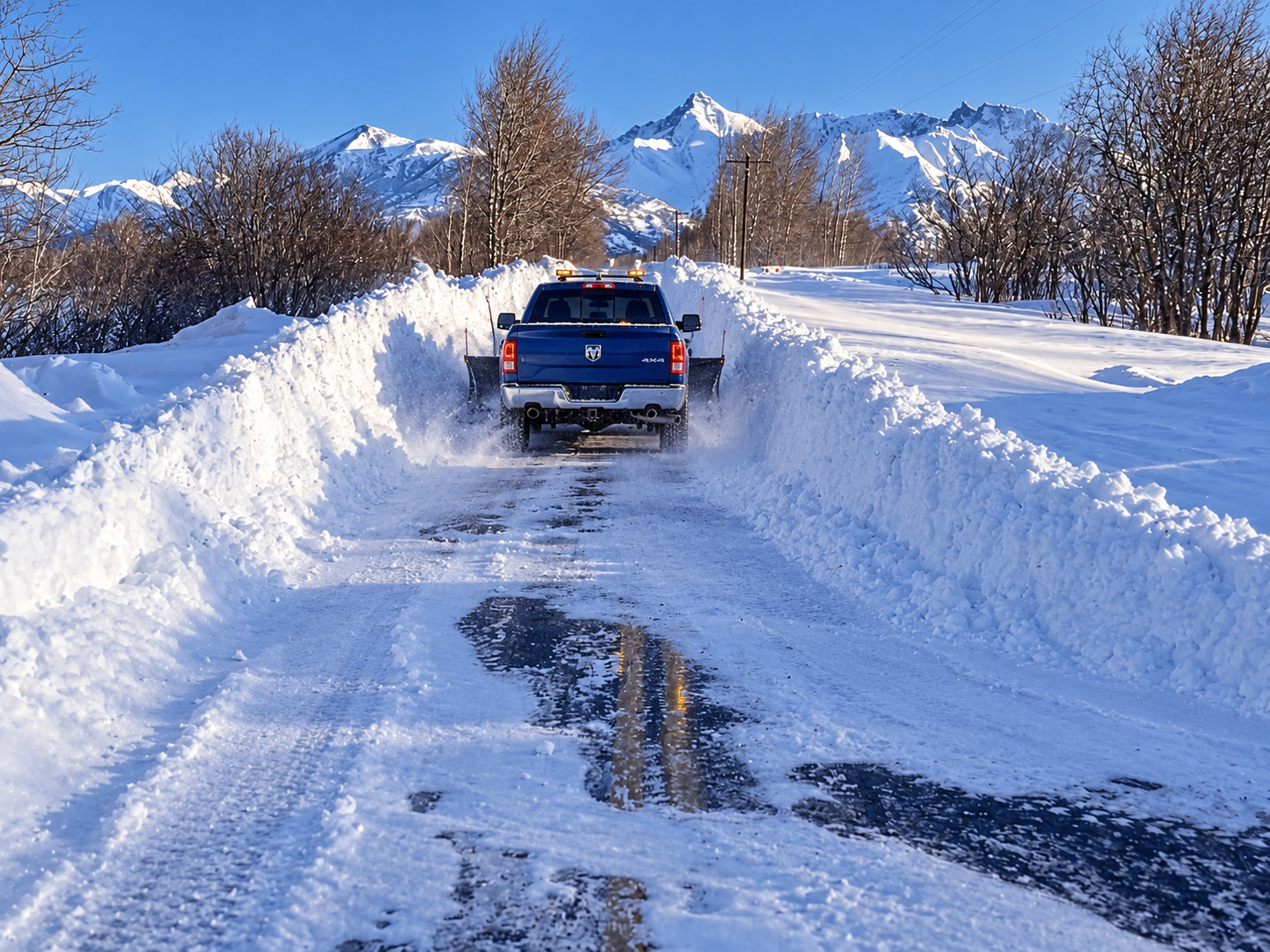
The best time to arrange snow plowing is before regular winter storms begin, especially for properties that depend on predictable access throughout the season. That can include homes, businesses, apartment communities, vacation properties, and private roads.
Walker Landscapes offers residential and commercial snow plowing in Palmer, Wasilla, and throughout the Mat-Su Valley. Both Subscription and Per Push customers receive automatic service at the 2-inch snowfall trigger, with the choice between a flat rate or paying for each visit.
If you want snow removal in place before the next storm, request a snow plowing estimate.
About Walker Landscapes
Walker Landscapes is a family-owned company serving the Mat-Su Valley, Eagle River, Anchorage, and surrounding communities with professional landscape design and installation for residential and commercial properties. From paver patios to complete yard transformations, each project is planned around Alaska’s short planting season, freeze-thaw cycles, drainage patterns, varied soils, and the seasonal conditions that affect how properties function year-round.
That same practical understanding extends into winter. In addition to landscape installation, Walker Landscapes installs permanent outdoor lighting for homes and businesses as Alaska’s Only OMNI Certified Installer and offers residential and commercial snow plowing to help keep properties accessible through Alaska’s winter conditions.

Seth Walker, Co-Owner

Jeff Walker, Co-Owner
