
Every Valley family has a first-snow story. Some years it shows up so early that kids are trick-or-treating with Halloween costumes pulled over their snow suits. Other years it arrives in one big storm, and by morning the drifts are taller than the truck. And for some of us, the first flakes are the signal to start looking at flights to Hawaii.
However it arrives, the snow has to go somewhere. A few storms in, the banks are climbing, and every homeowner faces the same question: where should all of this go?
A little planning now protects your home, your landscape and your family's winter fun. Here's how to choose the right spot.
Why Placement Matters in Southcentral Alaska
In milder climates, a snowbank is gone in a week. Here, a large pile can last from November until breakup in April or May. Over those months it gets heavier, picks up gravel and road salt, and eventually releases all of that water into your yard.
Where you pile snow in November shapes what your property looks like in spring.
Read the Wind First
Anyone who has spent a winter in Palmer or Wasilla knows the wind has opinions. The Matanuska Valley is known for strong winter winds. Some come down the valley from the northeast and bring a hard cold snap. The Knik wind comes from the southeast and can bring a sudden warm-up.
What the wind means for your pile
Pile on the downwind side. Snow placed upwind of the driveway blows right back across it. Stack it on the side the wind blows toward, so drifts settle away from where you drive.
Watch for midwinter thaws. A warm Knik wind can melt the edge of a snowbank in an afternoon. When temperatures drop again, that runoff freezes into slick patches on driveways and walkways.
Expect drifting around tall piles. A large bank acts like a snow fence, and drifts collect behind it. Keep big piles away from doors, garage entrances and the path to the mailbox.
Local tip: Stand in your driveway during the next windy day and notice where snow naturally collects. Your property will tell you where the drifts want to go.
Good Spots and Problem Spots at a Glance
Every property is a little different, but these guidelines apply to most yards in the Valley.
| A Better Choice | Best Avoided |
|---|---|
| Open lawn at the edge of the property | Against the house foundation |
| Ground that slopes away from the home | On shrubs, young trees or garden beds |
| The downwind side of the driveway | Over drains, culverts or ditches |
| Areas with plenty of room to grow | Near hydrants, mailboxes or utility boxes |
| Places with a clear path for runoff | Against retaining walls or patio edges |
Why the "avoid" list matters
Snow against a foundation can send water into crawlspaces once it melts. Heavy, packed snow snaps branches, and the salt in plowed snow is hard on roots. Extra weight and trapped water also put stress on retaining walls and can loosen pavers over time.
Choosing Your Snow Storage Area
The ideal spot checks four boxes:
It sits downhill from the house, so runoff flows away from your home.
It's open ground, like a lawn edge or an unused corner of the lot.
It has room for a full season. Plan for March snowbanks, not just next week's.
It drains somewhere sensible, such as a ditch or a low area of lawn that absorbs water well.
A Note for Gravel Driveways
Gravel driveways are common across the Mat-Su, and every pass of a plow or shovel pulls some gravel into the pile. Choose a spot where that gravel can be raked back onto the driveway in spring rather than buried in your lawn or flower beds.
Keep the End of the Driveway Clear
Low snowbanks where the driveway meets the road keep children at the bus stop visible and give drivers a clear view of oncoming traffic. With mornings this dark, good sight lines are worth the extra effort. Reflective driveway markers also help everyone, including your plow driver, see the edges.
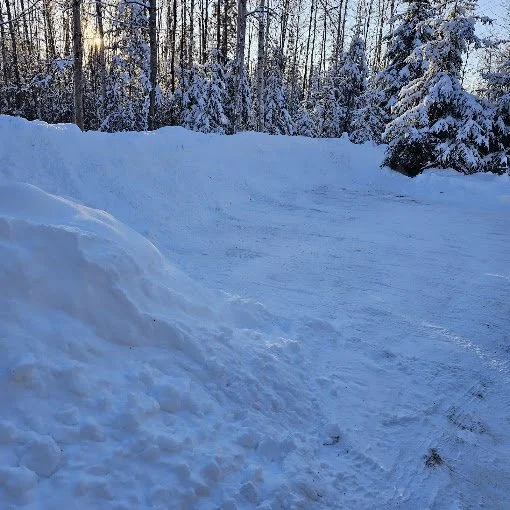
A Pile in the Right Place Can Be the Highlight of Winter
Put in the right spot, a snowbank becomes part of the family's winter:
A backyard sledding hill for little ones, far from the road
The base for a snow fort, with walls and lookouts built up around it
A canvas for snow sculptures, from snowmen to moose
One important safety rule: children should build on or beside a snow pile, never tunnel into it. Packed snow, especially from a plow, can collapse without warning.
For Businesses and Property Managers
Commercial properties need a plan before the first storm:
Keep parking spaces, accessible stalls and fire lanes clear all season
Place storage areas where they won't block signs, entrances or drivers' sight lines
Direct runoff away from sidewalks, where a midwinter thaw and refreeze can create ice
A designated snow storage area keeps a lot running smoothly from the first snowfall through breakup.
Planning a Landscape With Winter in Mind
The best snow storage plan often starts in the landscape design itself. When planning a new yard or updating an existing one, it helps to consider:
Where the plow or snowblower will naturally push snow
Which areas can hold a heavy pile without damage
How water will drain during breakup
Which plants and features should sit out of the way
A property designed for Alaska's seasons is easier to care for and healthier year after year.
A Well-Planned Winter Starts With the Right Spot
Good snow storage protects your home, keeps your plants and hardscape intact, and makes your property safer to get around all season. A few thoughtful decisions now mean less cleanup and fewer surprises when the snow melts.
Walker Landscapes helps homeowners and businesses across the Mat-Su Valley and Anchorage plan properties that work well in every season, from snow removal in winter to landscape design in summer. Schedule a consultation to get started.
About Walker Landscapes
Walker Landscapes is a family-owned company serving the Mat-Su Valley, Eagle River, Anchorage, and surrounding communities with professional landscape design and installation for residential and commercial properties. From paver patios to complete yard transformations, each project is planned around Alaska’s short planting season, freeze-thaw cycles, drainage patterns, varied soils, and the seasonal conditions that affect how properties function year-round.
That same practical understanding extends into winter. In addition to landscape installation, Walker Landscapes installs permanent outdoor lighting for homes and businesses as Alaska’s Only OMNI Certified Installer and offers residential and commercial snow plowing to help keep properties accessible through Alaska’s winter conditions.

Seth Walker, Co-Owner

Jeff Walker, Co-Owner
